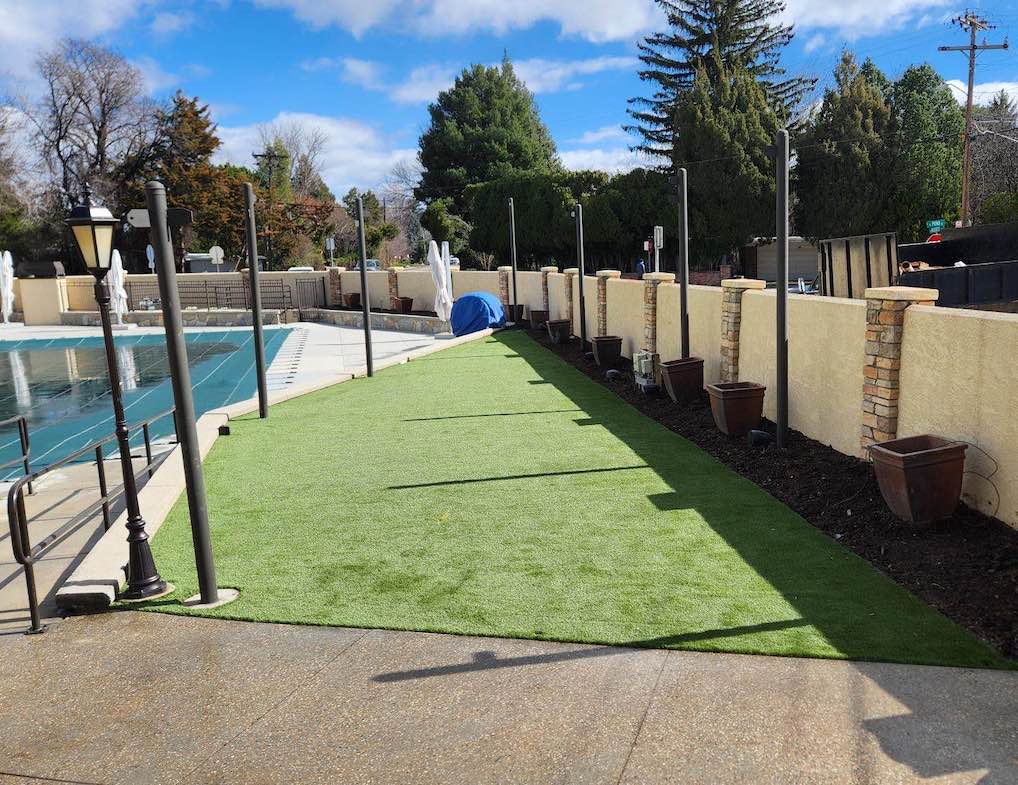
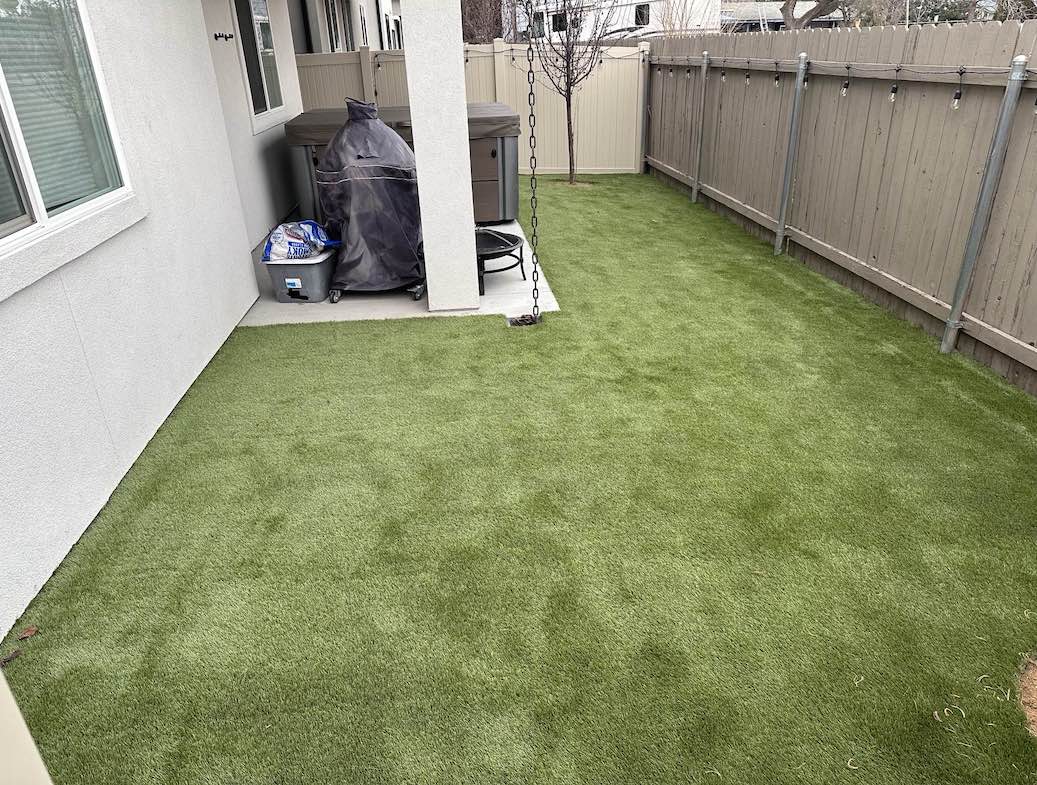
When Idaho homeowners start researching artificial grass vs natural grass, they usually expect a straightforward answer. What they find is that it depends – on their yard, their lifestyle, their budget, and how much time they want to spend maintaining a lawn. This guide gives you an honest, side-by-side comparison of both options so you can make the right call for your specific situation.
The Core Difference: What You’re Actually Choosing Between
Natural grass is a living system. It needs water, nutrients, sunlight, and ongoing care to survive. In Idaho’s climate – hot dry summers, cold winters, and limited rainfall – keeping it alive and looking good is a real commitment.
Artificial grass in Idaho is an engineered surface. Once installed correctly, it performs consistently regardless of weather, season, or how much use it gets. The tradeoff is a higher upfront cost and the fact that it’s not a living surface.
Neither is universally better. The right choice depends on what matters most to you.
Side-by-Side Comparison
Water Usage
Natural grass in Idaho’s Treasure Valley requires significant irrigation during summer months. Boise’s dry climate means lawns need watering multiple times per week from May through September just to stay alive – and water rates in the area have been increasing year over year.
Artificial grass requires no irrigation. A periodic rinse to remove dust or cool the surface on hot days is the full water requirement. For homeowners concerned about water costs or conservation, this is one of the most significant differences between the two options.
Winner: Artificial grass – by a significant margin in Idaho’s dry climate.
Maintenance
Natural grass requires mowing, edging, fertilizing, weed control, aeration, overseeding, and pest treatment on a regular basis. In Idaho, that maintenance calendar runs from early spring through late fall – roughly seven to eight months of active lawn care per year.
Artificial grass requires a light brush to keep fibers upright and an occasional rinse. That’s it. No seasonal schedule, no equipment, no treatments.
Winner: Artificial grass for homeowners who want less time spent on yard work.
Appearance
This one is more nuanced than it used to be. High-quality artificial grass from manufacturers like SYNLawn has advanced significantly – modern products are designed to look and feel natural, with varied blade lengths, realistic color variation, and a soft texture underfoot.
That said, natural grass has a living quality that artificial turf doesn’t fully replicate – the feel of real soil, the way it responds to rain, the subtle variations of a living surface. For homeowners who value that authenticity, natural grass still wins on pure aesthetics.
Winner: Tie – high-quality artificial grass is visually comparable, but natural grass has an authenticity that some homeowners prefer.
Durability and Wear
Natural grass in high-traffic areas – dog runs, play areas, pathways – gets worn down and develops bare patches that require repair. In drought conditions, even low-traffic areas can die back.
Artificial grass handles heavy use without showing wear. The same area that would become a mud pit or bare patch with natural grass stays consistent under foot traffic, pet activity, and play.
Winner: Artificial grass for high-use areas and pet households.
Environmental Impact
This comparison is more complicated than it appears on either side.
Natural grass produces oxygen, supports soil health, provides habitat for insects and microorganisms, and is fully biodegradable. However, the water consumption and chemical treatments required to maintain it in Idaho’s climate have their own environmental cost.
Artificial grass eliminates water consumption and chemical use, but it is a synthetic product. SYNLawn addresses this with its EnviroLoc+ backing system – a plant-based technology made partially from soybean oil that reduces the environmental footprint of the product compared to standard synthetic turf.
Winner: Depends on your priorities – natural grass wins on biodiversity, artificial grass wins on water and chemical usage.
Cost – Upfront
Natural grass is less expensive to establish. Sod installation in Idaho typically runs $3 to $6 per square foot installed. Seeding is even less expensive but takes longer to establish.
Artificial grass installation ranges from $10 to $25 per square foot installed depending on the product and site requirements – a higher initial investment.
Winner: Natural grass for upfront cost.
Cost – Long Term
When you factor in the ongoing costs of water, lawn care services, fertilizer, treatments, and equipment over a 10-year period, the economics shift significantly in favor of artificial grass. Most SYNLawn Idaho customers find their system pays for itself within a few years and continues saving money across a product life of 15 to 20 years.
Winner: Artificial grass for long-term cost of ownership.
Safety for Children and Pets
Natural grass requires fertilizers, herbicides, and pest treatments to stay healthy – chemicals that children and pets come into direct contact with. Organic lawn care reduces this risk but is more expensive and less effective.
SYNLawn artificial grass is lead-free, non-toxic, and requires no chemical treatments. Pet-specific systems include antimicrobial technology that keeps the surface hygienic even under heavy pet use.
Winner: Artificial grass for households with children and pets.
Which Situations Favor Natural Grass?
Being honest about this matters. Natural grass is genuinely the better choice in some situations:
- Large rural properties where water cost is low and maintenance is handled by staff or equipment
- Homeowners who genuinely enjoy gardening and lawn care as a hobby
- Properties in cooler, wetter climates where natural grass requires minimal irrigation
- Situations where budget constraints make the upfront cost of artificial grass prohibitive
- Homeowners who place high value on a living, organic outdoor environment
Which Situations Favor Artificial Grass?
Artificial grass is clearly the better choice for:
- Households with dogs or children who use the yard heavily
- Homeowners in Boise, Meridian, Eagle, Star and the Treasure Valley where summer irrigation costs are significant
- Properties with shaded areas where natural grass struggles to grow
- Homeowners who want a consistently attractive yard without ongoing maintenance
- Commercial properties, putting greens, rooftop spaces, and play areas
- Anyone looking to reduce their long-term property maintenance costs
Explore residential artificial grass options from SYNLawn Idaho
The Honest Bottom Line
For most Idaho homeowners – particularly those in the Treasure Valley dealing with dry summers, rising water costs, and busy schedules – artificial grass wins the practical comparison. The upfront investment is higher, but the ongoing savings, reduced maintenance, and year-round consistency make it the more cost-effective and lower-effort choice over time.
For homeowners who genuinely love lawn care, have easy access to affordable water, or place high value on a living outdoor surface, natural grass remains a valid choice.
The best way to figure out which is right for your specific yard is to talk through it with someone who installs both. Request a free consultation from SYNLawn Idaho and we’ll give you an honest assessment of what makes sense for your property.
Frequently Asked Questions
Does artificial grass look as good as natural grass?
Modern high-quality artificial grass is designed to closely replicate the appearance of natural grass, with realistic color variation, varied blade lengths, and a soft feel underfoot. From a normal viewing distance, the difference is minimal. Up close or underfoot, natural grass has a living quality that artificial turf doesn’t fully replicate – but for most homeowners, the visual result of a quality artificial grass installation is indistinguishable from well-maintained natural turf.
Is artificial grass better for dogs than natural grass?
For most dog owners, yes. Artificial grass eliminates the mud, dead patches, and odor issues that come with dogs on natural grass, and removes the need for chemical treatments that dogs are exposed to. SYNLawn’s pet-specific systems include antimicrobial technology and enhanced drainage that natural grass simply can’t match.
How does artificial grass handle Idaho winters?
Very well. Artificial grass is not affected by frost, snow, or freeze-thaw cycles in the way natural grass is. It doesn’t go dormant, turn brown, or require spring recovery. Snow can be removed with a plastic rake or leaf blower – metal shovels should be avoided to protect the fibers.
Can artificial grass be installed next to natural grass?
Yes. Many Idaho homeowners install artificial grass in specific areas – a backyard pet zone, a putting green, a shaded side yard – while keeping natural grass in other areas. The two can coexist without any issues.
Will my HOA allow artificial grass in Boise?
Most HOAs in the Treasure Valley permit artificial grass, particularly high-quality products that closely resemble natural turf. Some HOAs have specific requirements around appearance or installation methods. SYNLawn Idaho can advise on this during a free consultation.