
Why Idaho’s Four Seasons Matter for Artificial Turf
Artificial turf does not grow, go dormant, or turn brown with the seasons, but the complete system still responds to weather. Water must move through the turf and prepared base. Fibers may flatten under snow or heavy traffic. Leaves and dust can collect between blades. Surface temperatures can rise in direct summer sun. A well-planned installation accounts for these conditions before the first roll of turf is placed. Product selection matters, but grading, compaction, drainage, infill, and secure edges often have an even greater effect on long-term performance.Spring: Managing Snowmelt, Rain, and Debris
Spring is when drainage receives its first serious test. Melting snow and seasonal rain should pass through the turf and move away through the aggregate base. If water remains on the surface, the problem may be connected to the grade, compacted soil below the system, blocked drainage, or an existing low spot. Once the ground is clear, remove branches, leaves, and other material that collected during winter. Use a leaf blower, plastic rake, or stiff synthetic brush. Avoid tools with sharp metal edges that could catch the backing or pull at a seam. Spring is also a good time to walk the perimeter and check transitions near patios, curbs, fences, and planting beds. Look for lifted edges, displaced infill, or areas that feel softer than the surrounding surface. Addressing a small issue early is easier than waiting until repeated foot traffic makes it more noticeable. Explore residential artificial grass options for Idaho homesSummer: Heat, Sun, Dust, and Heavy Use
Artificial turf stays green without the mowing and routine watering required by natural grass. However, like pavers, decking, and other outdoor surfaces, turf can become warm in direct sunlight. Surface temperature depends on sun exposure, air temperature, turf construction, infill, surrounding hardscape, and shade. On very hot days, plan barefoot play for cooler parts of the day and test the surface before children or pets use it. A light rinse can provide temporary cooling. Shade from trees, umbrellas, pergolas, or nearby structures can also improve comfort in frequently used areas. Summer often brings the most foot traffic. Backyard gatherings, pets, games, and outdoor furniture can press fibers down in busy zones. Periodic cross-brushing against the direction of the fibers helps restore their upright appearance. Move furniture occasionally and use wide, stable feet beneath heavy items so weight is distributed more evenly. Dust and pollen are usually handled with rainfall or an occasional rinse. Clean spills promptly with water and a mild, turf-safe cleaner when needed. Avoid harsh chemicals unless the turf manufacturer or installer confirms they are suitable.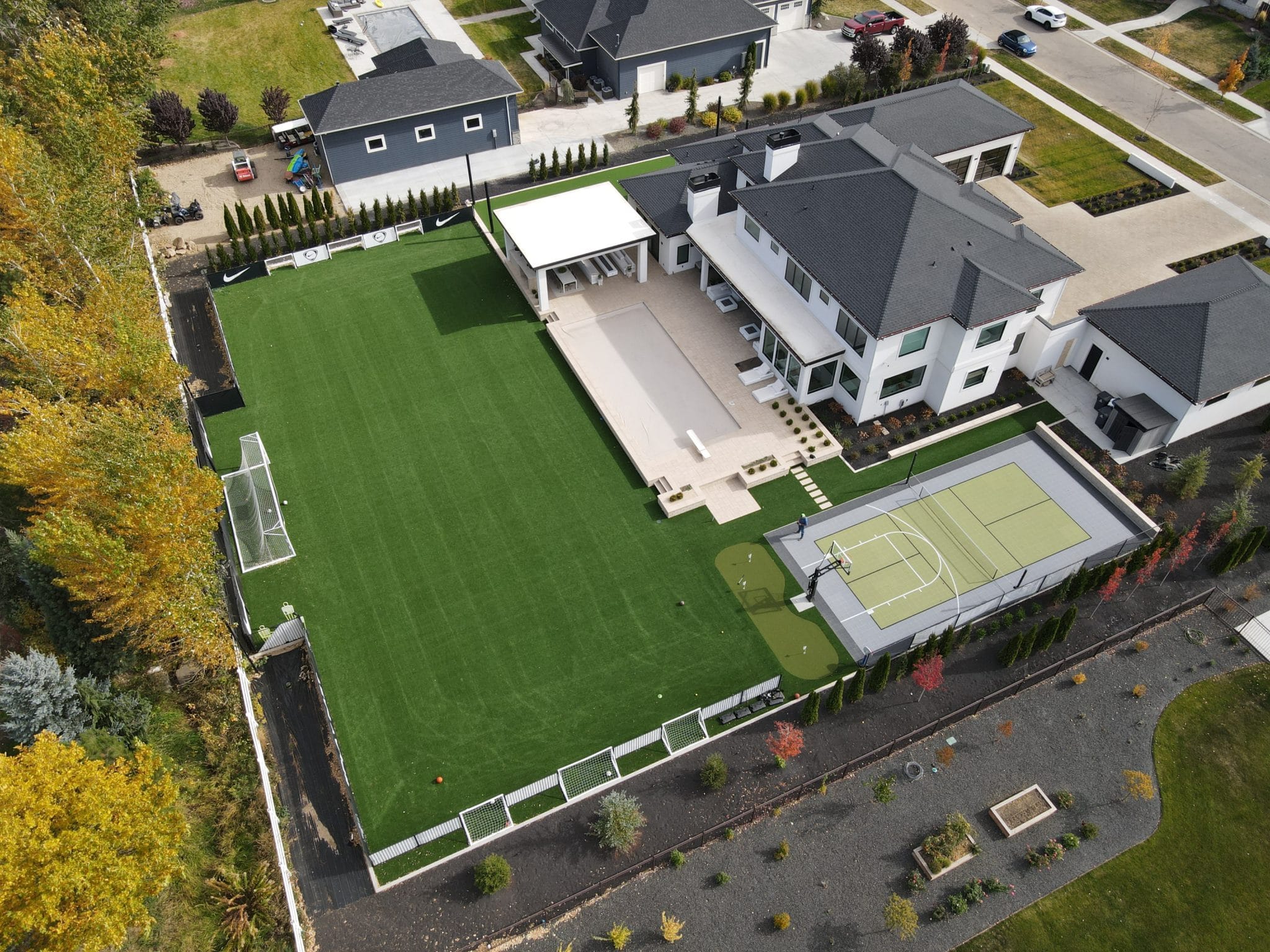
Fall: Leaves, Wind, and Preparing for Winter
Fallen leaves should not remain on the lawn for long periods. Wet organic material can break down, create a messy surface, and make drainage openings harder to keep clear. A blower is often the fastest option, while a plastic rake works well around corners and landscaped edges. Fall is also the right time to check infill levels in high-traffic areas. Infill supports the blades and contributes to stability and feel. If a section looks flat even after brushing, the system may need infill redistribution or professional service. Before the first snow, remove toys, lightweight furniture, and planters that could trap moisture or leave compressed areas for months. Confirm that downspouts and nearby drains are clear so winter runoff has a planned route away from the home.Winter: Snow, Ice, and Freezing Temperatures
Snow can remain on artificial turf without harming a properly installed system. In many cases, the safest approach is to let it melt naturally. If the area must be cleared, use a plastic shovel or soft push broom and leave a thin layer rather than scraping directly against the fibers. Avoid using sharp metal tools to break ice. They can damage blades, seams, or backing. Do not apply deicers, salts, or other chemicals unless they are specifically approved for the turf system. When uncertain, ask the installer before treating the surface. After snow melts, fibers that were compressed may look flat. Allow the area to dry, then brush the turf gently against the grain. The lawn should return to its normal appearance as the fibers lift and infill settles.What Determines Year-Round Performance?
Idaho weather is only one part of the equation. The following installation details strongly influence how the lawn performs:- Correct grading – the surface should direct water away from the home and prevent low spots.
- A compacted aggregate base – a consistent foundation helps limit movement, settling, and uneven areas.
- Application-specific turf – family lawns, pet spaces, play areas, and putting greens need different fiber and system specifications.
- Secure seams and edges – careful joining and perimeter attachment help the surface stay flat through seasonal use.
- The right infill – proper type and quantity support fibers, stability, drainage, and the feel underfoot.
- Planned drainage – the turf, base, soil conditions, and surrounding landscape must work as one system.

A Simple Artificial Turf Care Schedule
Spring
Remove winter debris, inspect edges, check drainage, and brush flattened areas after the surface dries.Summer
Rinse dust when needed, clean spills promptly, brush high-traffic areas, and check surface temperature before barefoot use.Fall
Remove leaves regularly, clear nearby drains, inspect infill, and move seasonal furniture before snow.Winter
Let snow melt when possible. Use plastic tools for necessary clearing and avoid unapproved ice treatments. For most homes, care is simple and occasional. Properties with pets, heavy foot traffic, nearby trees, or commercial use may benefit from more frequent brushing, cleaning, and infill checks. Review SYNLawn Idaho’s turf maintenance servicesFrequently Asked Questions
Does artificial turf stay green during an Idaho winter?
Yes. Artificial turf does not enter dormancy, so its color remains consistent through winter. Snow may temporarily cover or flatten the fibers, but brushing after the surface dries can help restore the appearance.Can freezing temperatures damage artificial turf?
Quality turf is designed for outdoor conditions, but the complete installation matters. A stable base, correct drainage, secure seams, and suitable materials help the system handle freeze-and-thaw cycles.Will snowmelt drain through artificial turf?
Water can pass through permeable turf and into the prepared base. Effective drainage also depends on grading, soil conditions, base construction, and where the water is directed after it leaves the surface.Can I shovel snow from an artificial lawn?
Yes, when access is necessary. Use a plastic shovel or soft broom and avoid scraping directly against the fibers. Sharp metal tools can cut or pull the turf.How often should artificial turf be professionally maintained?
There is no single schedule for every property. Usage, pets, surrounding trees, dust, infill movement, and drainage conditions all affect the need. An installer can recommend a schedule after reviewing the space.Ready to plan a four-season artificial turf project in Idaho? Request a free quote.