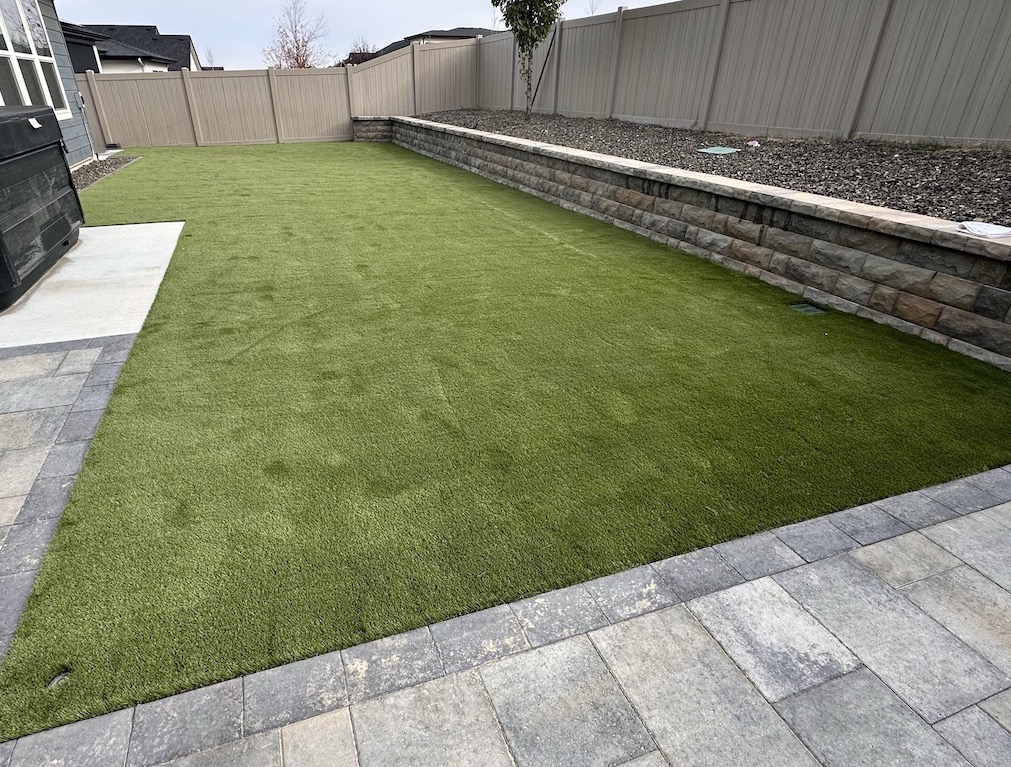
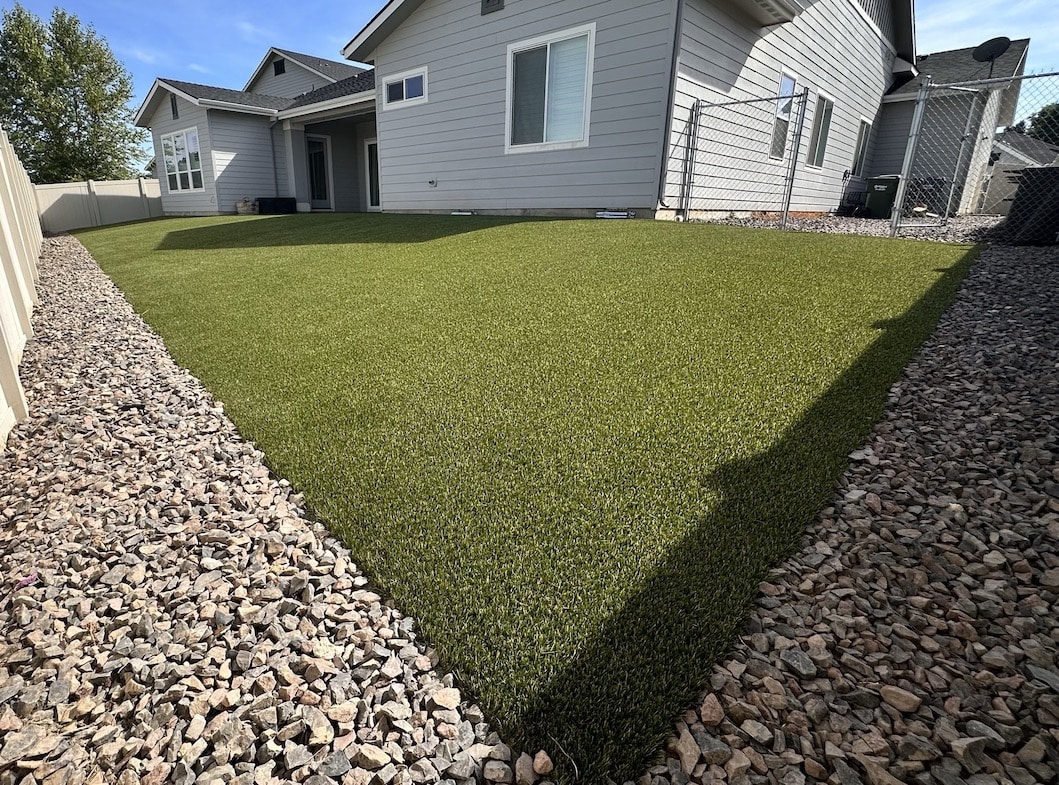
Artificial grass in Boise is built to last – but “low maintenance” doesn’t mean “no maintenance.” The homeowners who get 15 to 20 years out of their artificial grass in Boise are the ones who follow a simple care routine from day one. The ones who skip it end up with flattened fibers, persistent odors, and a surface that looks tired way ahead of schedule. This guide gives you the exact cleaning and maintenance routine that keeps artificial turf looking sharp and performing well year-round in Idaho’s climate.
Why Artificial Turf Needs Regular Care in Idaho
Idaho’s climate throws a lot at outdoor surfaces. Hot, dry summers mean dust and debris settle into the fibers. Spring brings pollen and organic material that can build up on the surface. Winter freeze-thaw cycles can affect the base if drainage gets blocked. And if you have dogs, the year-round biological load on the turf adds another layer of maintenance requirement.
None of this is complicated to manage – but it does require consistency. A turf surface that gets regular attention stays fresh and performs well. One that gets ignored for months at a time is harder to bring back.
The Complete Artificial Turf Maintenance Routine
The Foundation – Periodic Maintenance as Needed
Rinse the surface with a garden hose. A thorough rinse flushes out dust, pollen, loose debris, and – if you have dogs – liquid waste from the drainage system. Work from one end of the turf to the other so everything moves through the base rather than pooling.
Remove debris. Leaves, twigs, and organic material that sit on the surface for extended periods can break down and stain fibers or introduce mold in damp conditions. A leaf blower on a low setting clears lightweight debris fast. A plastic rake works well for heavier material – never use a metal rake, which can damage the fibers.
Monthly – Brush the Fibers
Artificial turf fibers flatten in high-traffic areas over time. A monthly brush with a stiff-bristled broom or a power broom keeps fibers upright, maintains the natural appearance of the surface, and works infill back into position.
Brush against the grain – that means in the opposite direction from the way the fibers lean. This lifts them upright rather than pushing them further down.
Pay extra attention to areas that get the most use: pathways across the turf, spots where dogs run repeatedly, and the area immediately around gates and doors.
Seasonally – The Deeper Clean
A few times per year – ideally spring, midsummer, and fall – give the turf a more thorough clean that goes beyond the weekly rinse.
Check and clear the drainage. Make sure water moves freely through the base after rinsing. If you notice water pooling on the surface or draining slowly, the base may have compacted in a specific area or debris may be blocking drainage paths at the edges. This is worth addressing quickly – poor drainage is the main cause of odor problems.
Inspect the infill level. Look at the fiber depth across the surface. If fibers in high-traffic areas look noticeably shorter or the surface feels harder underfoot than it used to, the infill may need topping up. Standard residential turf needs about 1 to 2 pounds of infill per square foot – adding a small amount to depleted areas and brushing it in restores the feel and performance of the surface.
Check edges and seams. Walk the perimeter of the turf and check that edges are still secured and seams are lying flat. Edges that have lifted or shifted can usually be re-secured without professional help – but catching them early prevents them from becoming bigger issues.
Clean any stained areas. Idaho’s summer dust can leave a light residue on turf fibers over time. A gentle cleaning solution – diluted dish soap and water – applied with a soft brush and rinsed thoroughly handles most surface staining. Always rinse completely after any cleaning product.
Handling Specific Situations
Pet Waste
Solid waste – pick it up as you would from any lawn surface, then rinse the area. For liquid waste, the regular weekly rinse handles it in most cases. For any persistent odor, apply a diluted enzyme cleaner to the affected area, work it into the fibers with a brush, and rinse thoroughly. Enzyme cleaners break down the bacteria causing the odor rather than masking it – they are the right tool for this job.
SYNLawn Idaho’s pet turf systems use antimicrobial infill that actively inhibits bacterial growth, which significantly reduces how often enzyme treatments are needed.
Mud and Dirt
Let mud dry completely before attempting to clean it. Once dry, most mud brushes or shakes off the surface easily. Rinse what remains. Trying to clean wet mud typically pushes it deeper into the fibers.
Gum and Sticky Substances
Freeze the substance with an ice pack or a bag of ice until it hardens, then break it off carefully. Avoid pulling at it while soft – this can damage fibers. A small amount of rubbing alcohol on a cloth handles any residue.
Oil and Grease
Apply a small amount of mineral spirits or a gentle degreaser to the affected area, work it in with a cloth, and rinse thoroughly. Test any cleaning product on an inconspicuous area first.
Snow and Ice
Artificial turf handles Idaho winters well. Snow can be left to melt naturally or removed with a plastic shovel or a leaf blower – never use a metal shovel, which can tear fibers and damage the surface. Do not use rock salt or chemical de-icers on artificial turf – they can damage the fibers and base materials over time. Sand is a safer option if traction is needed on a turf surface in icy conditions.
Stains From Organic Material
Berries, bird droppings, and leaf tannins can stain turf fibers if left untreated. Rinse as soon as you notice them. For set stains, a diluted solution of white vinegar and water applied with a soft brush followed by a thorough rinse handles most organic staining.
What to Avoid
A few things that damage artificial turf and should be avoided:
- Metal tools – metal rakes, shovels, and stiff metal brushes all damage fibers
- Harsh chemical cleaners – bleach, solvents, and strong acids degrade fiber materials and can damage the base layer
- Pressure washers on high settings – moderate pressure is fine for cleaning; high-pressure settings can dislodge infill and damage fibers
- BBQ grills and fire pits directly on the turf – heat from direct flame or hot coals melts synthetic fibers permanently. Always use a heat barrier underneath any heat source
- Heavy vehicles – cars and other heavy vehicles compact the base and damage fibers; artificial turf is not designed for vehicle traffic
- Rock salt and chemical de-icers – use sand instead for winter traction
Putting Green Maintenance
Putting greens have a slightly different maintenance requirement because consistent ball roll performance depends on the surface being clean and the fibers being upright.
Brush the putting green surface regularly – more frequently than a standard lawn area, ideally after every few sessions of use. Keep the surface clear of debris that would affect ball roll. Rinse periodically to keep the surface clean. Check the cup fittings and flagstick holder periodically to make sure they are secure.
SYNLawn Idaho’s custom putting green installations are built with the right base and infill specification for consistent performance – proper maintenance keeps that performance consistent for years.
When to Call a Professional
Most artificial turf maintenance is straightforward DIY work. But a few situations are worth calling SYNLawn Idaho about:
- Significant drainage problems that don’t resolve with edge cleaning
- Large areas where infill has been significantly displaced
- Seams that have separated or edges that have lifted across a long section
- Fiber damage from heat or mechanical impact affecting a large area
- Surface odor that persists after enzyme treatment and thorough rinsing
Contact SYNLawn Idaho for a maintenance assessment – we serve Boise, Meridian, Nampa, and the wider Treasure Valley.
Frequently Asked Questions
How often should I clean artificial grass in Boise?
A weekly rinse and debris removal is the minimum routine for most residential turf. Pet areas benefit from two to three rinses per week. A monthly brush to keep fibers upright and a seasonal deeper clean round out the full maintenance schedule.
Can I use a pressure washer on artificial turf?
Yes, at moderate pressure settings. High-pressure washing can dislodge infill and damage fibers. A standard garden hose with good flow handles most cleaning needs without the risk of damage.
Why does my artificial turf smell even after rinsing?
Persistent odor in pet areas usually means the infill needs an enzyme treatment rather than just a water rinse. Apply a diluted enzyme cleaner, work it into the fibers, and rinse thoroughly. If odor persists after treatment, the infill may need to be partially replaced – contact SYNLawn Idaho for an assessment.
How do I stop my artificial turf from getting too hot in Idaho summers?
Rinse the surface with a garden hose before letting pets or children use it during peak afternoon heat. Shade structures over part of the turf area help significantly. SYNLawn’s HeatBlock technology reduces surface temperature compared to standard artificial turf – if heat is a persistent concern, ask about product options during your next consultation.
Can I use vinegar to clean artificial turf?
Yes. A diluted white vinegar and water solution is safe for artificial turf and effective for organic stains and mild odor control. Always rinse the surface thoroughly after applying any cleaning solution.
Does artificial turf need to be replaced eventually?
Quality artificial turf from SYNLawn Idaho is designed to last 15 to 20 years with regular maintenance. Consistent care – particularly keeping drainage clear and fibers upright – is the biggest factor in reaching the upper end of that range.