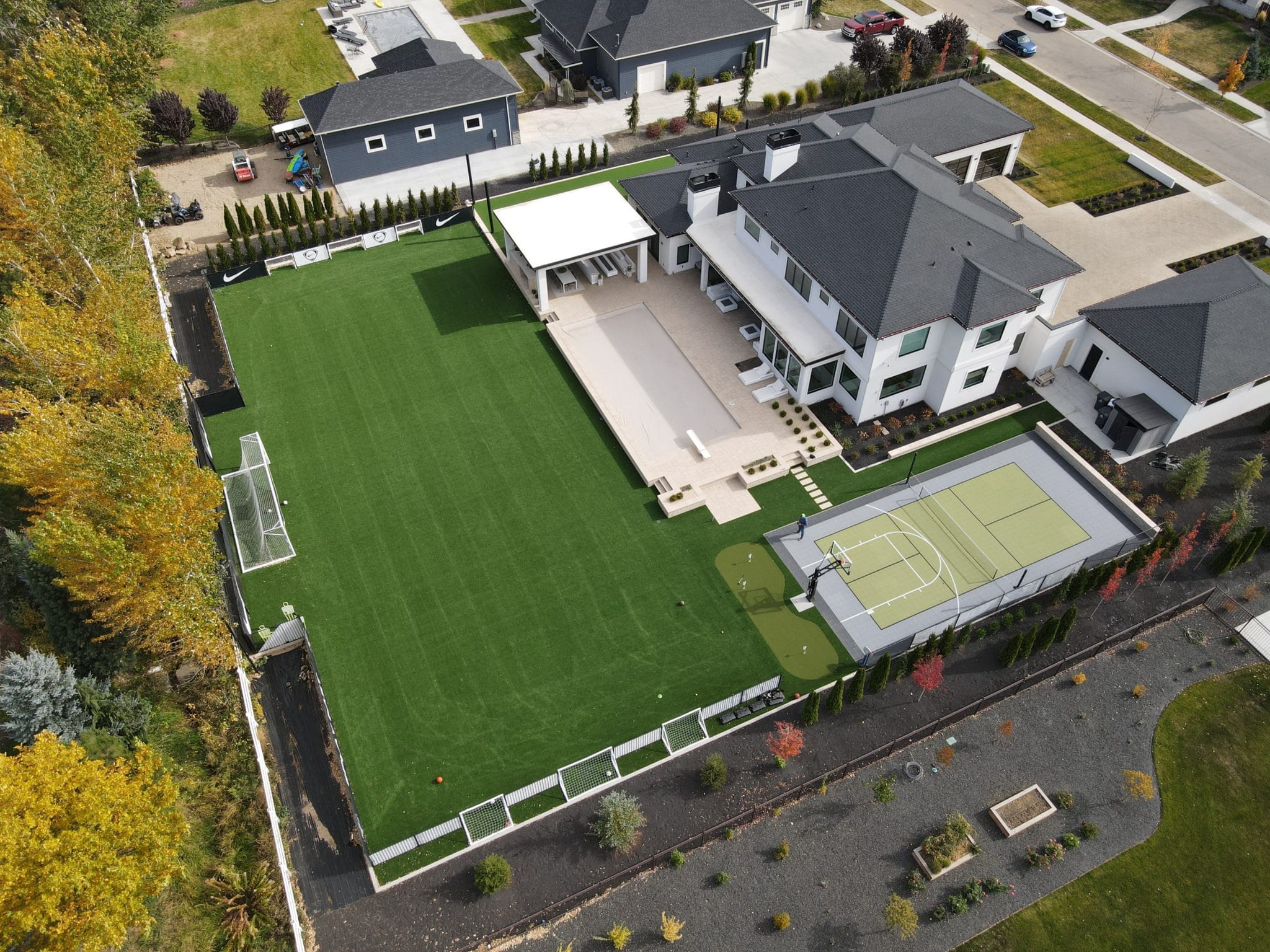
If you’ve opened a water bill in Boise during July or August and felt your stomach drop, you’re not alone. Idaho’s dry summers push residential water usage – and water bills – to their highest point of the year, and rates in the Treasure Valley have been climbing steadily. For homeowners with natural grass, finding water-saving lawn alternatives in Boise has become less of a nice-to-have and more of a financial necessity. Artificial grass is the most effective answer available – and this guide explains exactly why.
Why Idaho Water Bills Spike Every Summer
Boise’s climate is high desert. Annual rainfall averages around 12 inches – well below what a natural lawn needs to survive summer. From roughly May through September, most Treasure Valley homeowners are running irrigation systems two to four times per week just to keep grass alive.
Water rates across the Treasure Valley have been rising year over year. The City of Boise has raised municipal irrigation rates for recent budget cycles, and Veolia, the water company serving most of the Boise area, has filed for a significant general rate increase affecting its Idaho customers. These aren’t small adjustments – they add up to a meaningfully higher water bill every single summer.
For homeowners with a natural lawn, there’s no way to opt out of this cost. The grass needs water to survive, and in Idaho’s climate, that means significant irrigation spending every year from May through September.
How Much Water Does a Natural Lawn Actually Use?
The water consumption of a natural lawn in Idaho is substantial. A healthy natural lawn requires approximately 1 to 1.5 inches of water per week during the growing season. For a typical 1,000 square foot lawn, that’s roughly 600 to 900 gallons of water per week – just to maintain acceptable condition.
During peak summer heat in Boise, that requirement goes up. And because Boise’s rainfall is minimal during summer months, virtually all of that water has to come from irrigation.
Multiply that across a five-month irrigation season and the water volume dedicated to keeping a natural lawn alive in Idaho is significant – and it’s being billed at rates that increase year over year.
What Happens When You Replace Your Lawn With Artificial Grass
The shift to artificial grass eliminates lawn irrigation entirely. A typical artificial grass yard in Boise requires:
- An occasional rinse to remove dust or debris – typically a garden hose for a few minutes
- A cool-down rinse on extremely hot days if the surface temperature feels too warm
- A more thorough rinse in pet areas – weekly or a few times per week for households with multiple dogs
That’s the total water requirement. No irrigation schedule, no sprinkler system running multiple times per week, no water wasted on keeping a natural surface alive during Idaho’s dry season.
For homeowners with pet turf systems, the weekly rinse is a little more involved – but still a fraction of the water a natural lawn requires.
Beyond Water Bills: The Full Cost Picture
Water savings are the headline benefit, but they’re part of a larger financial picture that makes artificial grass the smart switch for Idaho homeowners:
Eliminated Lawn Care Costs
No mowing service, no fertilizer treatments, no weed control, no aeration – the services required to keep a natural lawn healthy in Idaho add up to hundreds or thousands of dollars per year depending on the property size and service level.
No Irrigation System Maintenance
Sprinkler systems require annual startup and winterization, occasional repairs, and periodic head replacement. These costs disappear with an artificial lawn.
Reduced Time Investment
For homeowners who handle their own lawn care, the time savings are significant – hours per week during the growing season that are simply no longer required.
Explore SYNLawn Idaho’s residential artificial grass options
What About Drought Restrictions?
Boise and surrounding Treasure Valley communities have introduced water use restrictions during drought periods in recent years – mandatory limits on irrigation days and times that make it genuinely difficult to keep natural grass healthy.
Artificial grass is completely unaffected by irrigation restrictions. It stays green and usable regardless of whether watering restrictions are in place, what stage of drought the region is in, or how hot the summer gets. For homeowners who’ve watched natural grass turn brown and die during restriction periods, this is a meaningful quality-of-life improvement.
Is Artificial Grass Actually Good for the Environment?
This is a fair question and worth answering honestly. Artificial grass eliminates water consumption and chemical use – both significant environmental positives, particularly in a water-stressed region like the Treasure Valley.
SYNLawn’s EnviroLoc+ backing technology is a plant-based system made partially from soybean oil – a meaningful step away from fully petroleum-based synthetic products. SYNLawn products are also manufactured in the USA, reducing the transportation footprint compared to imported turf.
On the other side, artificial grass is a synthetic product that will eventually need replacement. The environmental calculus isn’t perfectly one-sided – but for homeowners in Idaho’s high-desert climate, where natural grass maintenance requires heavy chemical and water inputs, artificial grass is a responsible choice.
What Artificial Grass Costs vs What It Saves
Professional artificial grass installation from SYNLawn Idaho ranges from $10 to $25 per square foot installed depending on the product and site requirements.
The savings begin immediately after installation – no irrigation costs, no lawn care expenses, no sprinkler system maintenance. The exact payback period depends on the size of your lawn and your current maintenance spend, but most Treasure Valley homeowners find their system pays for itself within a few years and continues saving money across a product life of 15 to 20 years.
The best way to understand what the numbers look like for your specific yard is through a free site consultation. Book your free consultation with SYNLawn Idaho and we’ll walk you through the cost and savings picture for your property specifically.
Other Water-Saving Lawn Alternatives in Boise
Artificial grass is the most effective solution, but it’s worth acknowledging the other options Idaho homeowners consider:
Xeriscaping
Replacing lawn with drought-tolerant plants, gravel, and native species significantly reduces water usage. It’s a lower-cost option upfront but requires ongoing plant maintenance and doesn’t provide the usable outdoor surface that artificial grass does.
Native Grass Species
Some low-water native grass varieties require less irrigation than standard turf. However, in Boise’s summer heat, even drought-tolerant grass species need some irrigation to stay alive and look presentable.
Hardscaping
Replacing lawn with pavers, concrete, or decking eliminates water usage entirely, but also eliminates the softness and visual warmth of a green outdoor space.
Artificial grass is the only option that eliminates irrigation costs entirely while providing a consistent, usable, visually attractive outdoor surface year-round – which is why it’s the choice most Boise homeowners land on when water savings are the primary driver.
Frequently Asked Questions
How much can I save on water bills with artificial grass in Boise?
Water savings depend on your current lawn size and irrigation habits. Artificial grass eliminates lawn irrigation entirely – replacing an ongoing seasonal expense with zero water cost for lawn maintenance. SYNLawn Idaho can help you estimate savings based on your specific yard size during the free consultation.
Does artificial grass get too hot in Idaho summers?
Artificial surfaces do absorb heat in direct sunlight. SYNLawn’s HeatBlock technology reduces surface temperature by up to 20% compared to standard artificial turf – an important consideration for Idaho’s hot summers. Rinsing the surface with water on very hot days brings the temperature down quickly.
Will artificial grass stay green during Boise’s water restrictions?
Yes. Artificial grass is unaffected by irrigation restrictions, drought conditions, or any weather. It stays the same color and condition regardless of what’s happening with water supply or usage limits.
Is artificial grass allowed in Boise under current water conservation guidelines?
Yes. Artificial grass is consistent with Boise’s water conservation goals and is not subject to any restrictions. Some utility providers and municipalities actively encourage the switch as part of broader conservation efforts.
How long before artificial grass pays for itself in Idaho?
The payback period depends on your current lawn size and maintenance costs. For most Boise homeowners, the combination of eliminated water bills, lawn care expenses, and sprinkler system maintenance means the system pays for itself within a few years – after which the savings continue across a 15 to 20 year product life.
Does SYNLawn Idaho offer free consultations?
Yes. SYNLawn Idaho provides free, no-obligation on-site consultations for residential and commercial properties across Boise, Meridian, Nampa, Idaho Falls, and surrounding areas.